Showing posts with label Beneficial Insects. Show all posts

7.28.2014

How to Attract Birds

I walked out to the garden tonight and was able to get close to the Yellow Finches that were picking away at the Italian Sunflowers! So beautiful.  They are acrobatic hanging upside down and eating sunflowers (their favorite).

Birds are an important part of a healthy garden.  They eat insects that are pests and simply need: shelter, cover, water and food.  You can add elements to your garden to make sure you have your own bird haven.
American Goldfinches- Female (left) Male (right)
This year we cleared out the back right corner of our yard and added a small flower bed (on the far right of the picture below).
Garden on July 28th
The new addition of the small flower bed has been the perfect solution to an unsightly area.  It also allowed us to create an environment to attract birds.  We moved one of our birdbaths to this location and also added a small birdhouse. This corner is also shaded so it provides an escape from the heat of the garden.
Birdhouse & Birdbath- under the tree in the shade
UPDATE ON RAISED BEDS IN GARDEN: The pictures below show the progress in the garden.  Around mid-August the garden will be close to final production.  However, right now things are still growing!
BED #1- Parsley, Asparagus & Summer Squash
BED #2- Zucchini, Onions, Tomatoes, & Okra (removed Cucumber vines today due to disease)
CENTER BED: Herbs, Marigolds, Tomato & Peppers
BED #3- Zucchini, Green Beans, Peppers & Cucumbers (removed Cucumber vines today due to disease)
BED #4- Pumpkins, Onions & Summer Squash (previously had lettuce)

5.25.2013

Attracting Beneficials (Nature's Pest Control)

You may remember from an earlier post that we decided to add a flower bed in front of garden this year.  The reasons were twofold: we wanted to attract beneficials to our garden as well as add aesthetic appeal.  (Also our amazing neighbors had extra landscaping stones that they gave us for free)!
 

I had learned from my Square Foot Gardening Book that marigolds helped control pests and attract beneficial insects.  So as soon as I started gardening I planted marigolds by my plants.  This was a step in the right direction, but this past winter I discovered there was more that could be done.

It all started when I was researching ways to have a more productive organic garden (there is always room for improvement and gaining knowledge) and I came across information on attracting beneficials to the garden.  I found it was about more than just planting a few marigolds.  One helpful fact sheet I found was: A guide to beneficials in the Home Garden

Here are some of the quick tips I learned to attract beneficials:
1. Include plants of varying heights
2. Plant at least 6 varieties of plants that attract beneficial insects
    (for ideas on plant varieties see link to site @ end of post)
3. Provide water for insects (as simple as a small saucer on a dry day)
4. Give insects on the ground some cover (stepping stones, mulch, flat stones, boards)

In response to this I decided to add a bird bath, a bird house and some decorative garden elements to the flower beds (we already had stones.)  I also designed the beds to have the taller plants starting in the back and the shorter plants in the front.  
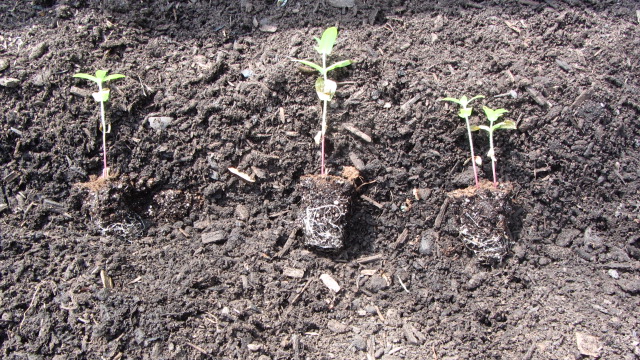
Spacing out Zinnia seedlings
So after our last spring frost (mid May) I gathered all my flower seeds and zinnia seedlings and started the planting process. 
 Transplanted Zinnia seedlings


The flowers I choose to plant in the beds:

Echinacea- Purple Coneflower
Poppy- Giant Peony Mix
Lavendar- Lady
Marigolds- Eskimo White
Sunflowers- Summertime Mix
Sunflowers- Russian Mammoth
Wildflower- Butterfly Mix
Yarrow- White
Zinnias- both Cut and Come again & Lilliput (some were seedlings I planted.)

I also found this site that lists flowers to plant to attract beneficial insectsIt specifically lists out the types of insects that each flower will attract. 

This site provides easy to understand tables listing the pest and then has a table for attracting beneficial insects by plant. 


Seedlings and Seeds planted! Now its time to sit back & watch them grow.


4.29.2013

2013 Garden Expansion

Below you can see the most current updates to the garden.  We decided to add some decorative touches this year so that it looked more like a garden and less like "giant dog pin" in the yard.  It started with buying 9 Gothic fence posts to add some detail.  Then our amazing neighbor had extra landscape stones and let us have them.  We decided to make 2 flower beds which will be planted to attract beneficial insects.  We added compost to the beds and I moved the birdbath, birdhouse and some shepherds hooks from the front yard to the new flower beds.  The last step was to add some stepping stones and mulch between the raised beds.

Garden expanded for 2013.  Bed #1 starts on the left.
The compost tumblers are in constant need of carbon materials to balance out the nitrogen (mostly our kitchen scraps).  We had leaves left in our garden from last fall so I decided to rake them up and move them closer to the compost so I could add them easily to the tumblers. These stakes and the chicken wire are recycled from our very first 4 x 4 garden!  Things have certainly expanded since then.
Leaf pile

The compost tumblers are in constant need of carbon materials to balance out the nitrogen (mostly our kitchen scraps).  We had leaves left in our garden from last fall so I decided to rake them up and move them closer to the compost so I could add them easily to the tumblers. These stakes and the chicken wire are recycled from our very first 4 x 4 garden!  Things have certainly expanded since then. 

Compost tumblers

Bed #1 planted with- (3) Parsley, (4) 2yr. Asparagus crowns, (25) 1 yr. Jersey Supreme Asparagus, and (16) Peas. 
Bed #2 planted with- (16) Peas.  More plants to follow.


New cedar raised beds (#1and #2)
Asparagus & Parsley
(4) 2 yr. Asparagus and (3) Parsley

1 yr. Asparagus starting to grow

Bed #3 planted with- (32) White Onions, (64) Stuttgart Yellow Onions, (32) Red Onions and (16) Peas. More plants to follow. 
Bed #4 planted with- (16) Peas. More plants to follow.

2 year old pine raised beds (#3 and #4)

Peas

Onion tops with peas in the background
Onions


Center of the garden ready for future watermelon plants.

Stepping stones

Stepping stones between raised beds